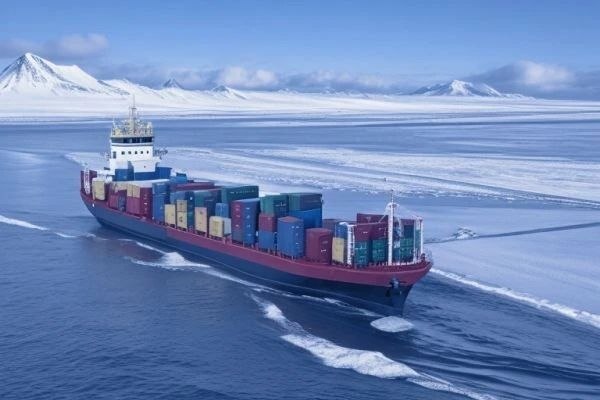
Russia is ready to allow Western vessels to use the Northern Sea Route, but the corridor will remain fully under Russian control. This was stated by Minister for the Development of the Russian Far East and Arctic Alexey Chekunkov.
According to him, ships under any flag will be able to transit the NSR, but only relying on Russian icebreaker escort, navigation services, emergency and rescue infrastructure, and satellite data.
Interest in the route is growing amid rising risks on traditional shipping lanes, including the Strait of Hormuz and the Red Sea. The NSR can shorten the journey between Asia and Europe by 30–40% compared with the Suez route.
The main barriers for Western traffic remain sanctions, the cost of icebreaker assistance, disputes over the route’s legal status, and environmental restrictions.
At the same time, Russia is developing the Northern Sea Route as a strategic transport corridor and is focusing on partners from China, India, and the UAE, which are already increasing shipping activity in the Arctic.
According to him, ships under any flag will be able to transit the NSR, but only relying on Russian icebreaker escort, navigation services, emergency and rescue infrastructure, and satellite data.
Interest in the route is growing amid rising risks on traditional shipping lanes, including the Strait of Hormuz and the Red Sea. The NSR can shorten the journey between Asia and Europe by 30–40% compared with the Suez route.
The main barriers for Western traffic remain sanctions, the cost of icebreaker assistance, disputes over the route’s legal status, and environmental restrictions.
At the same time, Russia is developing the Northern Sea Route as a strategic transport corridor and is focusing on partners from China, India, and the UAE, which are already increasing shipping activity in the Arctic.