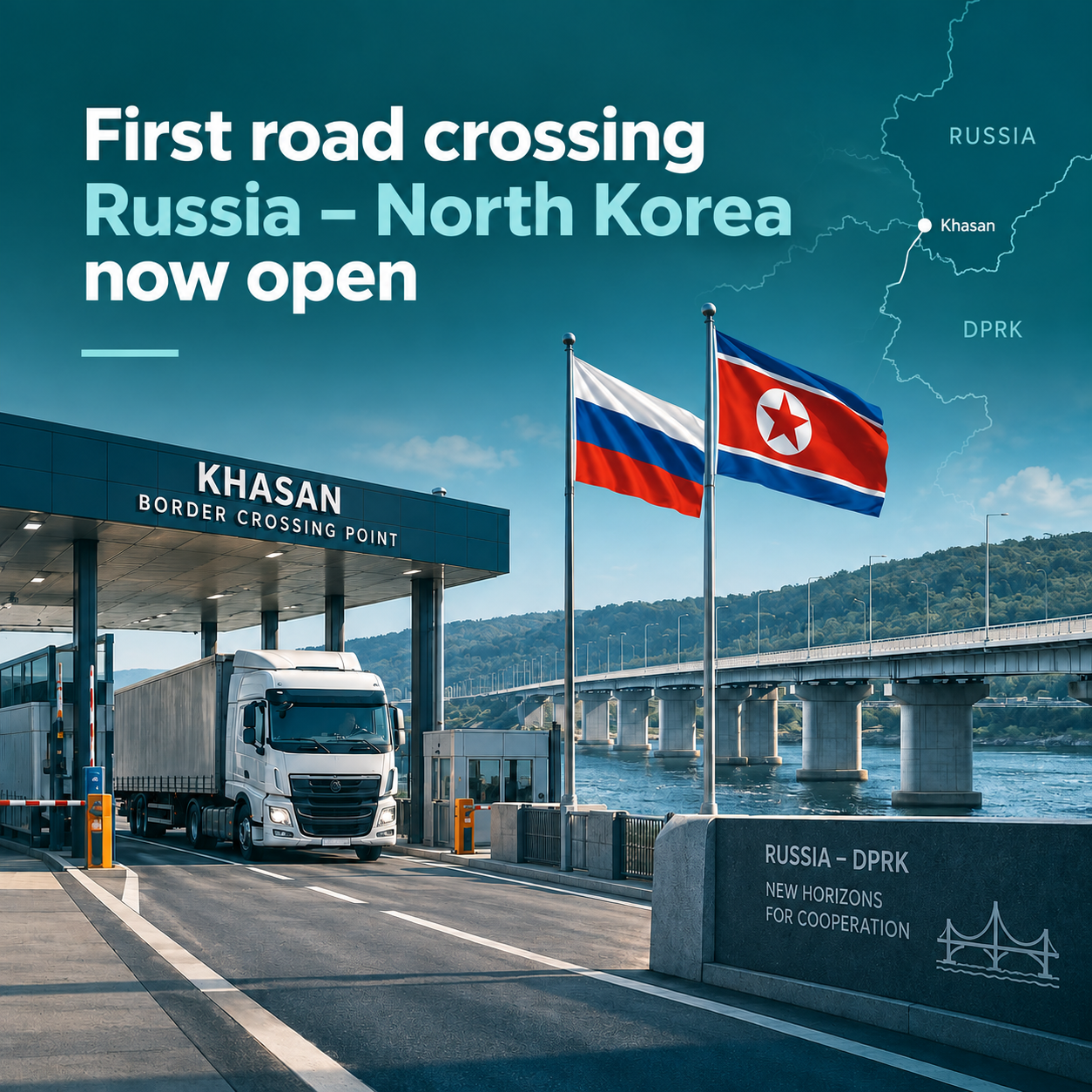
On September 7, direct road transport between Russia and North Korea (DPRK) opened for the first time. The Khasan road border crossing began operations, with traffic now using the new bridge across the Tumen River.
For now, the Khasan crossing is open to freight traffic only. Once fully completed, the checkpoint will have 10 lanes: 4 for trucks, 2 for oversized vehicles, 2 for buses, and 2 for passenger cars. Passenger traffic will be launched at a later stage.
The crossing is designed to handle 300 vehicles and 2,325 people per day, with the potential to increase vehicle traffic to 800 vehicles per day in the future.
The bridge across the Tumen River itself is about 1 km long, while the entire bridge crossing stretches for almost 5 km. It will operate year-round. Until now, the only direct transport link between Russia and North Korea was the Friendship railway bridge.
For the logistics sector, this creates a new route in Russia’s Far East. Authorities expect the road connection to increase freight volumes, reduce transportation costs, and support further growth in trade between Russia and North Korea.